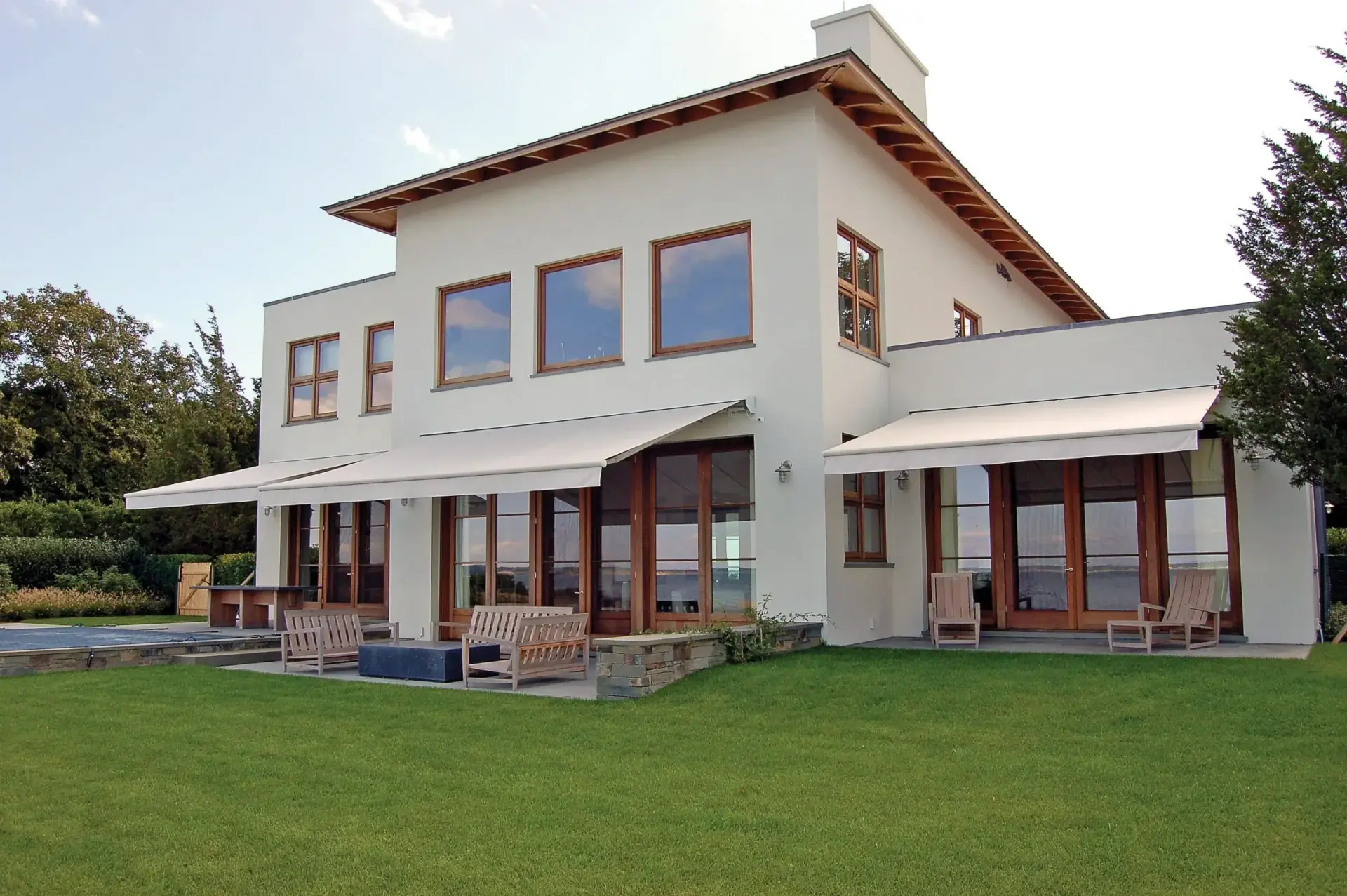
Clermont Plantation Shutters From Clermont Window Treatments
A short orientation before the detail: this product gets measured in your home, built to those sizes, and installed once it arrives. The answers here cover selection, operation, care and what the warranty does and doesn't include.
- Service: Plantation Shutters for Clermont homeowners
- Service area: Clermont, IN and surrounding areas Getting somebody out to measure is the easy part and happens on a normal schedule. After that the fabricator needs roughly two to five weeks. We give you a specific window when we write the order.
- Insured and bonded
- Serving Clermont, IN since 2008
Expert Plantation Shutters for Clermont Homes
Shutter pricing tracks panel count more than square footage. A wide opening split into four narrow panels costs more than a single window of the same area, because every panel carries its own stiles, rails, hinges and hanging labor. Specialty shapes and a T-post add again. Nationally, interior shutters run about $175 to $800 per window, and where a Clermont job lands in that range is mostly decided by how the openings get divided up. That's a drawing Clermont Window Treatments does with you.
Signs You Need Plantation Shutters
If you notice any of these in your Clermont home, it is worth booking a measure. None of it is urgent, and none of it fixes itself either.
A home office faces a street with steady traffic
The opening has clearly settled out of square
A patio slider needs coverage without a track of fabric
A west room glares onto the television every evening
Louvers drift open instead of holding position
Shutter whites in two rooms don't match each other
A bathroom shutter panel has started dragging the frame
An arched opening has been bare since you moved in
Arched or angled windows sit bare
Hardwood shutters in a wet room have warped
How Clermont Window Treatments Handles Plantation Shutters
Every job follows the same five-step process. Transparent, thorough, and done right the first time.
Three widths, three heights
Diagonal check, out-of-square recorded
Panel layout and swings drawn
Louver tension set, touch-up finished
Old treatment removed, holes patched
Plantation Shutters in Clermont
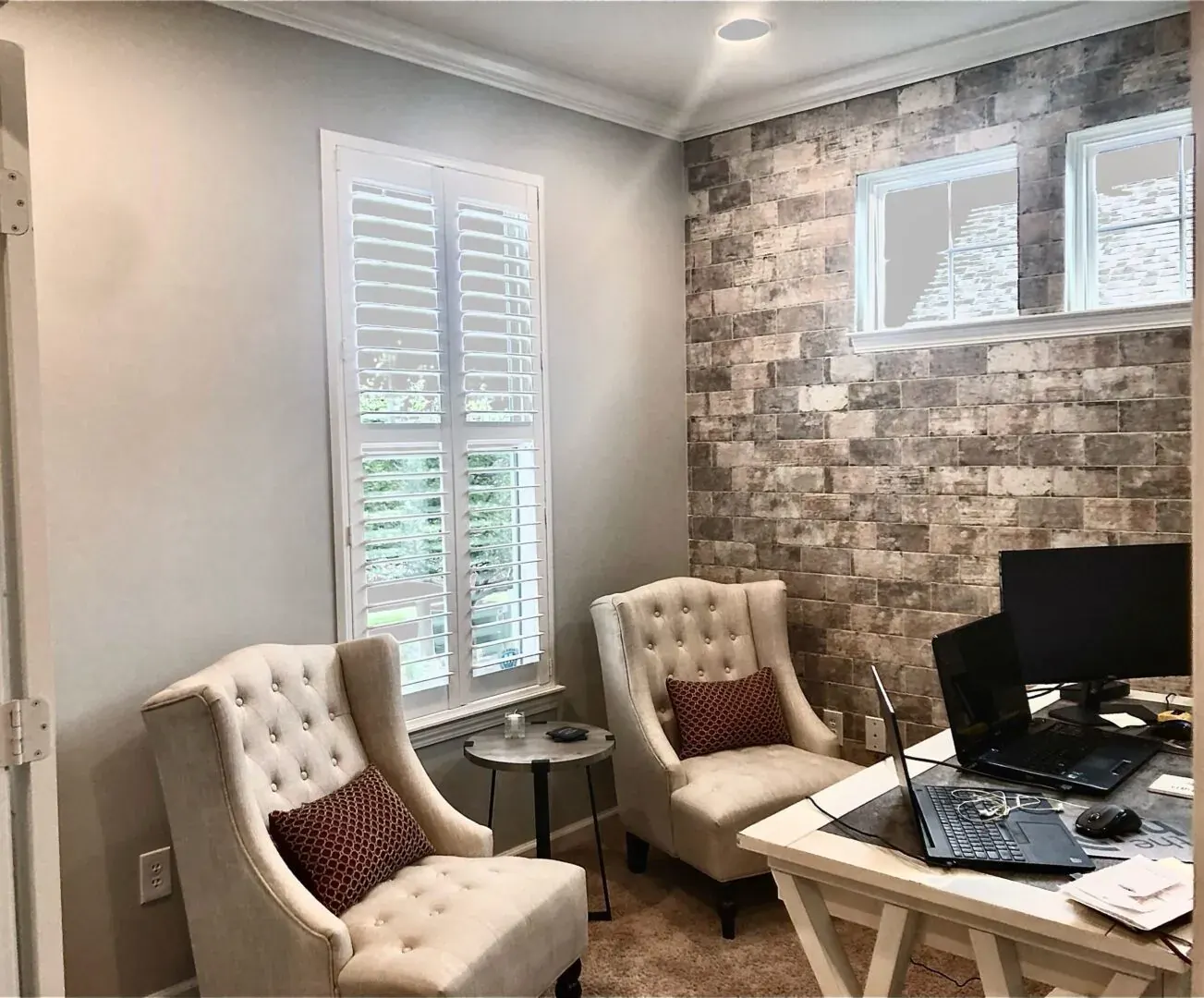
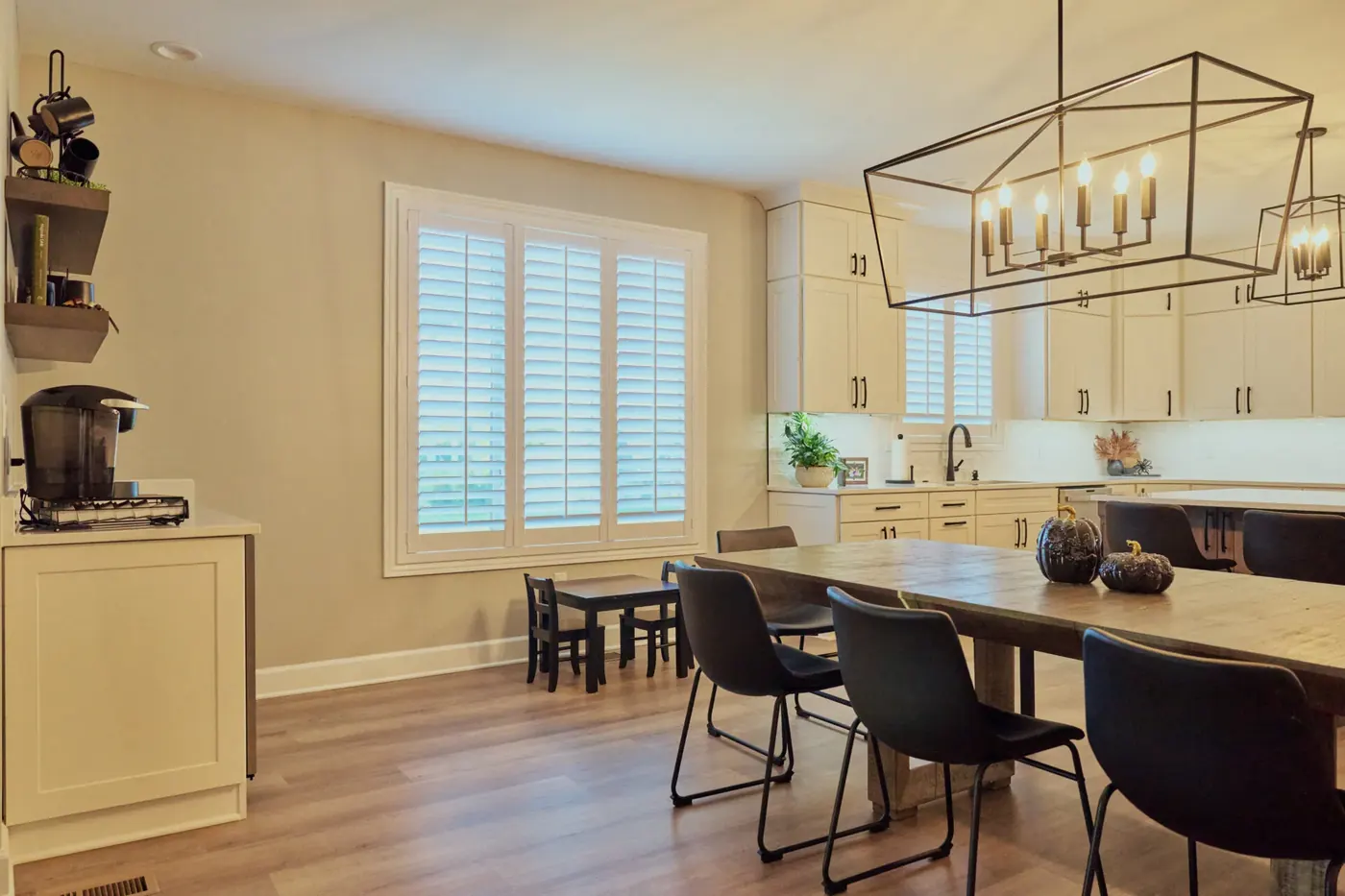
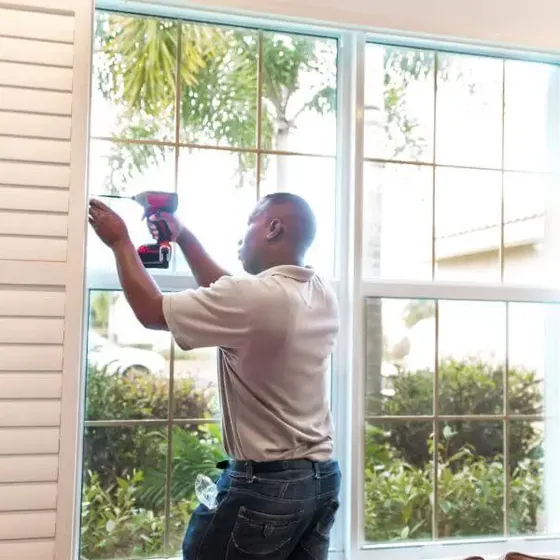
Photographs from real plantation shutters jobs completed by our crew in Clermont and surrounding areas.
What Plantation Shutters Includes
Every Clermont job is documented item by item. Here is what the crew covers.
Every opening measured three widths and three heights, then checked on the diagonal for square
Out-of-square openings quantified in sixteenths so the frame can be built to compensate
Mounting depth measured at all four corners to see whether an inside mount clears
Material specified per room, poly or composite anywhere humidity swings, hardwood only where it doesn't
Louver size chosen against the opening height and the trim, 2 1/2, 3 1/2 or 4 1/2 inch
Frame style selected per opening: L-frame, Z-frame or a deco frame with a wider face
Divider rails placed at a height that lines up across a room, not wherever the default falls
T-posts drawn on wide openings so panels stay a workable width and stay flat
Panel configuration laid out, how many panels, which way they swing, where they meet
Hinge finish and tilt rod style picked, hidden rod or a visible center rod
Bypass or bi-fold track specified where the opening is a patio slider rather than a window
Specialty shapes templated on site, arches, angles and circles included
Cut-outs marked for cranks, handles and anything else that lives inside the opening
Paint or stain matched to existing trim with a physical sample, never from a screen
Written contract with scope, dates and total price, as IC 24-5-11 requires on residential work over $150
Frames shimmed and fastened plumb so panels hang square and close without dragging
Louver tension set panel by panel so they hold position instead of drifting
Caulk and touch-up finished at the frame line so the shutter reads like part of the trim
What Plantation Shutters Cost in Clermont
Published national figures for interior shutters run roughly $175 to $800 per window. That's a national range for the category and it isn't a quote for a house in Clermont, because shutter pricing follows the opening more closely than almost anything else we sell. Size is the first driver, then material, since hardwood costs more than poly and gets specified in fewer rooms than people expect. After that it's the build: a wide opening that needs a T-post, a tall one that needs a divider rail, an arch that needs a template, a deco frame instead of a plain L-frame. Specialty shapes across Marion County sit at the top of the range because somebody is building a one-off frame to fit an opening that exists nowhere else.
How Plantation Shutters Differ by Product
Every product in this trade behaves differently in a room. Here is what that means for this work.
Poly and composite shutters: An engineered core with a hard finish that doesn't take on moisture. This is what we put in bathrooms, kitchens, laundry rooms and sunrooms, because Indiana humidity moves hardwood and a moved panel stops closing square.
Hardwood shutters: Usually basswood, lighter than poly for the same panel and able to carry a stain that shows real grain. Specify it in living rooms, bedrooms and dining rooms that stay conditioned through both seasons, and keep it out of wet rooms.
2 1/2 inch louver: The traditional size. It suits shorter openings, cottage-style trim and any window where a large louver would look out of scale. More louvers per panel means a busier face and slightly less open view.
3 1/2 inch louver: The most common specification and a safe default on standard openings. It balances view when open against coverage when closed, and it looks right against most of the trim we find in central Indiana homes.
4 1/2 inch louver: The widest we normally hang. On tall windows and in rooms with heavy trim it reads properly rather than fussy, and the open view is the best of the three. It needs the height to carry it.
L-frame: A simple right-angle frame that sits inside the opening and laps the face of the trim slightly. It's the cleanest inside mount and the one we use when the opening has enough depth to swallow the panels.
Z-frame: Adds a flange that covers the edge of the existing trim, which hides an out-of-square opening and gives the installer room to work. It's the workhorse in older houses where nothing is quite plumb.
Deco frame: A wider, shaped face frame that becomes part of the trim detail rather than disappearing into it. Choose it where the existing casing is thin and you want the shutter to carry visual weight on its own.
Divider rail: A horizontal rail that splits a panel so upper and lower louvers tilt independently. It lets you close the bottom for privacy while the top stays open, and on tall panels it stiffens the whole assembly.
T-post: A fixed vertical post between panels on a wide opening. It keeps individual panels at a width that stays flat and swings properly, and it gives the louvers something to close against in the middle.
Plantation Shutters FAQ
Questions we hear most often from Clermont homeowners considering plantation shutters.
Plantation Shutters Across Clermont
We measure and install in every one of these Clermont neighborhoods. Each has its own page with the build eras, window conditions and mounting notes for that section.
- Plantation Shutters in Lincolnwood
- Plantation Shutters in Tansel Woods
- Plantation Shutters in Westwood Park
- Plantation Shutters in Old Mechanicsburg
- Plantation Shutters in Sunningdale Commons
- Plantation Shutters in Drake Hill
- Plantation Shutters in Timberview at Eagle Creek
- Plantation Shutters in Bay Colony
- Plantation Shutters in Wynbrooke
- Plantation Shutters in Highlands at Eagle Crossing
Other Window Treatment Services in Clermont
Clermont Window Treatments handles the full scope of window treatment work. Explore our other services below.
Schedule Your Free In-Home Measure in Clermont
Reach Us Directly
Our team prioritizes scheduled measures and service calls, and books in-home measures during business hours.
Ready to Book Your Measure?
Call us to set up an in-home measure, or to ask about a treatment that has stopped working. We will talk it through on the phone first.